
Twenty-two sacred mantras for sleep and lucid dreaming — free for the world
By Luis Miguel Gallardo · Founder & President, World Happiness Foundation · Author of Nine Paths to One
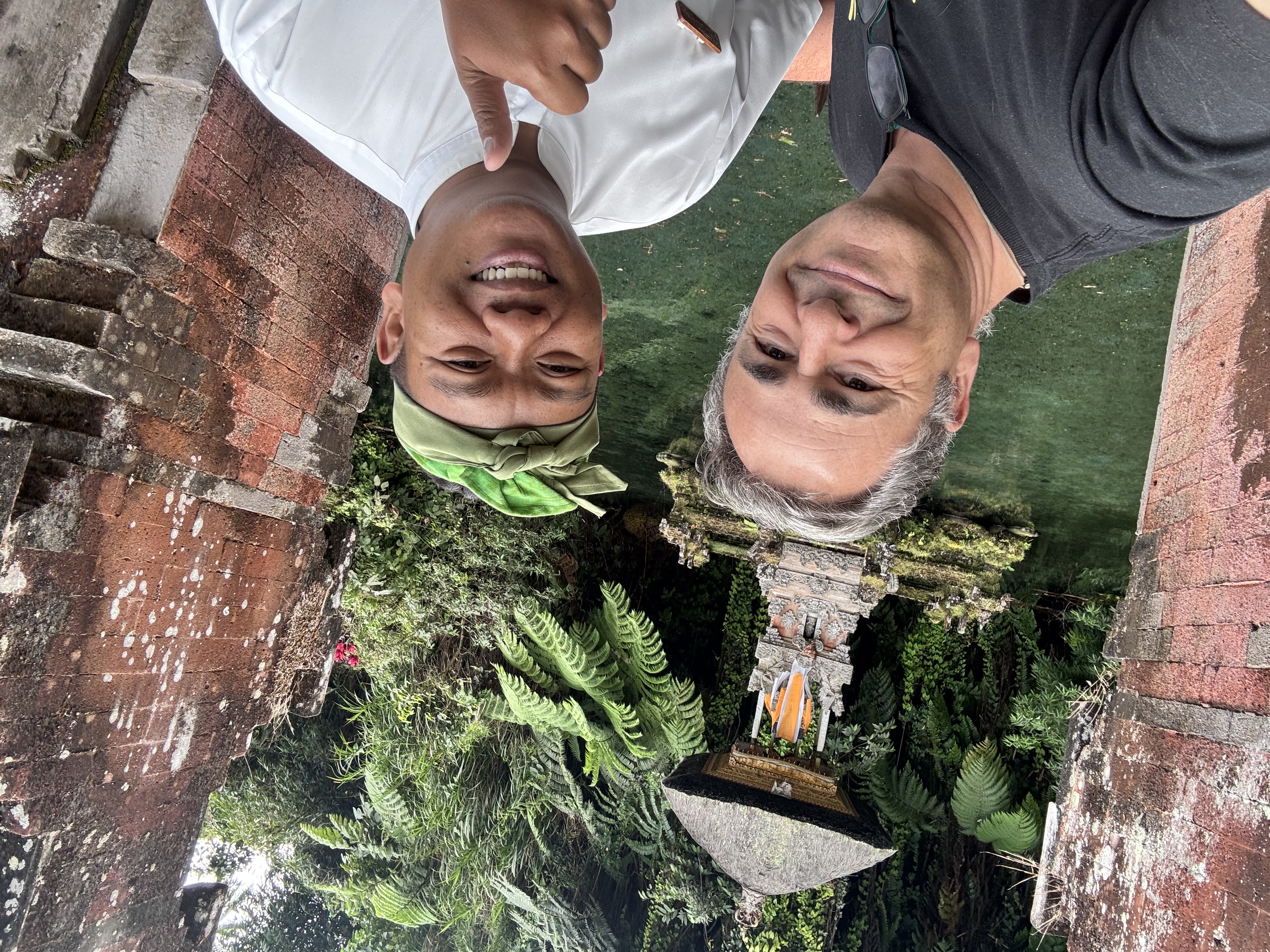
I am writing to you from Bali, in the hour after the frogs begin and before the moon clears the palms — the hour when this island quietly explains itself. Here, the world is understood as two worlds at once: sekala, the seen, and niskala, the unseen. They are not far apart. They are one breath apart. And the night is not an absence of day here; the night is a ceremony. In Balinese temple tradition, the gender wayang metallophones play through entire nights, because the dark hours are understood to be when the deepest work is done.
It is from inside that understanding — and from the middle of deep transformational work I am honored to guide here — that I want to offer you a gift. All of you. Freely.
It is called The Night of the Twenty-Two: Mantras for the Crossing — an album that is not a collection of songs but a single night: twenty-two sacred mantra pieces that carry you from the moment you lie down to the moment you wake, composed for deep sleep and for the ancient art of lucid dreaming. Every song, the complete teaching, and the full illustrated libreto are yours, free, here:
👉 https://ninetoone.org/mantras-lucid-dreaming
Listen to all twenty-two songs. Learn what lucid dreaming is and how to practice it gently. Download the libreto and keep it on your nightstand. Nothing is for sale on that page. It is a gift, and I will tell you why — but first, let me tell you what it is.
An album that is a night
A lucid dream is a dream in which you know you are dreaming. Nothing about the dream needs to change — the river is still a river — but one thing has been added, and it changes everything: awareness. Humanity has known this territory for a very long time. The Mandukya Upanishad mapped consciousness into four states — waking, dreaming, deep sleep, and turiya, the silent awareness beneath the other three — more than two thousand years ago. Tibetan dream yoga built a whole discipline around carrying awareness across the border of sleep. And in the late twentieth century, the laboratory confirmed what the monasteries always knew: dreamers signaled to researchers from inside REM sleep with pre-arranged movements of the eyes. It is possible to be awake and dreaming at the same time.
The Night of the Twenty-Two is built to walk you there — not by effort, which is the one thing that keeps lucidity away, but by architecture. The night unfolds through five Gates: Dusk, as you lie down; the Descent, as the mind's images loosen; Deep Night, the dreamless floor; the Thin Hour — 3:14, when the membrane between sekala and niskala is thinnest and the lucid gate stands open; and the Return, walking you home into morning. The music descends in key as the night deepens and rises again toward dawn. Each song is a single piece with its own natural length; played in order they form one continuous night, and each one alone is a complete meditation.
Three quiet companions are woven into the music. In every song, once, a dream seed is whispered — one line, in English and in Castilian, the two languages of my life — planted exactly where waking becomes dreaming. Through every song, about once a minute, a bamboo flute plays the same three soft notes: three, one, four — the thin hour, written as melody. This is a real technology of dream yoga: a cue the waking mind hears night after night begins to appear inside dreams, and when you hear the three notes inside a dream — one night you will — they arrive as a question: are you awake inside this? Answering yes is lucidity. The dream does not end. It opens. And in the final song, at dawn, the flute at last plays the three notes openly and resolves them upward into the morning. They were the melody of the whole night all along — the way awareness itself is hidden in every dream, waiting to be recognized.
The twenty-two crossings
Readers of the Nine Paths to One saga know it already holds two great numbers: the Nine — the walkers, the archetypal women whose journeys form the novels — and the Sixty-Four — the states of being, the full circle of what a human life can pass through. This album completes a third: the Twenty-Two, the bridges between the states. Twenty-two paths join the spheres of the Tree of Life; twenty-two Major Arcana walk the Fool home; twenty-two letters wrote the world in the oldest alphabet of light. Bridges, I finally understood, are crossed at night.
For the crossings I chose twenty-two of the most beloved mantras humanity has ever chanted — texts between four hundred and three thousand years old: verses of the Upanishads, the Triple Refuge of the Pali Canon, the Heart Sutra's Gate Gate Pāragate, the Medicine Buddha's healing syllables, the healing sun-moon of Ra Ma Da Sa, the names of Sita and Ram, the golden dawn of Lakshmi. Every one of them ancient. Every one of them belonging to everyone. And the tradition left me one gift I still hold with awe: when I searched for the deepest mantra of the deep-night Gate — "All this, truly, is Brahman" — I found it lives at Chandogya Upanishad 3.14.1. Three-fourteen. The thin hour of the saga had been sitting in one of humanity's oldest books for three thousand years, waiting for this night to find it.
For the teachers, the sleepers, and the dreamers
If you are a yoga teacher, this album was composed with you in mind: any single song carries a savasana; the Descent is a complete healing nidra; the Thin Hour holds visualization work; the Return opens a sunrise class. The libreto — a fully illustrated booklet in the album's midnight-and-gold design — gives you every mantra with its translation, its source, and the story of why it stands at that exact moment of the night, along with a full introduction to lucid dreaming you can share with your students.
If you simply want to sleep more deeply, held by the oldest words on Earth — that is enough. The night knows the way.
Why free
Because the words are older than ownership. These mantras have held sleepers, mourners, mothers, monks and travelers since before any of our languages existed; no one owns them, and I will not be the one to put a door in front of them. And because this is what the mission of my life looks like in practice: ten billion human beings, free, conscious, and happy. One of the twenty-two songs — the blessing sung at the thin hour — turns the whole radiance of the lucid dream outward to every being on the turning earth: may all be well, may all be at peace, may all be full, may all be blessed. An album built around that prayer could never be sold. It can only be given.
So here it is, from Bali, with the whole night inside it:
👉 https://ninetoone.org/mantras-lucid-dreaming
Listen freely. Learn the practice. Download the libreto. Share the page with anyone who does not sleep well, anyone who teaches, anyone who dreams.
Nine walkers. Sixty-four states. Twenty-two bridges. And the twenty-third bridge is not on the map, because the twenty-third bridge is you: the dreamer, waking in the morning light with three soft notes on your lips, not yet sure where you learned them, already carrying the night's gifts into a world that needs them.
Cross well. Bless everything. And when the dream arrives — you will know it is a dream.
Sekala, niskala — seen and unseen — one breath apart.
Luis Miguel Gallardo Bali, 2026 · Nine Paths to One · World Happiness Press
-----
Veintidós mantras sagrados para dormir y soñar lúcido — gratis para el mundo
Por Luis Miguel Gallardo · Fundador y Presidente, World Happiness Foundation · Autor de Nine Paths to One (Nueve Caminos a Uno)
Te escribo desde Bali, en la hora que sigue al despertar de las ranas y precede a la luna sobre las palmeras — la hora en la que esta isla, en voz baja, se explica a sí misma. Aquí el mundo se entiende como dos mundos a la vez: sekala, lo visible, y niskala, lo invisible. No están lejos el uno del otro. Están a un aliento de distancia. Y la noche aquí no es la ausencia del día; la noche es una ceremonia. En la tradición de los templos balineses, los metalófonos del gender wayang tocan noches enteras, porque las horas oscuras se entienden como el tiempo en que se hace el trabajo más profundo.
Es desde dentro de esa comprensión — y desde el centro del trabajo transformacional profundo que tengo el honor de guiar aquí — desde donde quiero ofrecerte un regalo. A todos. Libremente.
Se llama La Noche de los Veintidós: Mantras para la Travesía — un álbum que no es una colección de canciones sino una sola noche: veintidós piezas de mantras sagrados que te llevan desde el momento en que te acuestas hasta el momento en que despiertas, compuestas para el sueño profundo y para el arte antiguo del sueño lúcido. Cada canción, la enseñanza completa y el libreto ilustrado son tuyos, gratis, aquí:
👉 ninetoone.org/mantras-lucid-dreaming
Escucha las veintidós canciones. Aprende qué es el sueño lúcido y cómo practicarlo con suavidad. Descarga el libreto y déjalo en tu mesilla de noche. En esa página no se vende nada. Es un regalo, y te contaré por qué — pero primero, deja que te cuente qué es.
Un álbum que es una noche
Un sueño lúcido es un sueño en el que sabes que estás soñando. Nada del sueño necesita cambiar — el río sigue siendo un río — pero se ha añadido una sola cosa, y lo cambia todo: la consciencia. La humanidad conoce este territorio desde hace mucho tiempo. El Upanishad Mandukya cartografió la consciencia en cuatro estados — vigilia, sueño, sueño profundo y turiya, la consciencia silenciosa bajo los otros tres — hace más de dos mil años. El yoga tibetano del sueño construyó una disciplina entera en torno a llevar la consciencia a través de la frontera del dormir. Y a finales del siglo veinte, el laboratorio confirmó lo que los monasterios siempre supieron: los soñadores enviaron señales a los investigadores desde dentro del sueño REM con movimientos de ojos acordados de antemano. Es posible estar despierto y soñando al mismo tiempo.
La Noche de los Veintidós está construida para llevarte hasta allí — no mediante el esfuerzo, que es lo único que mantiene alejada la lucidez, sino mediante la arquitectura. La noche se despliega a través de cinco Puertas: el Crepúsculo, al acostarte; el Descenso, cuando las imágenes de la mente se aflojan; la Noche Profunda, el fondo sin sueños; la Hora Sutil — las 3:14, cuando la membrana entre sekala y niskala está en su punto más fino y la puerta lúcida queda abierta; y el Retorno, que te acompaña de vuelta a la mañana. La música desciende de tonalidad a medida que la noche se hace honda y vuelve a subir hacia el alba. Cada canción es una pieza única con su propia duración natural; escuchadas en orden forman una sola noche continua, y cada una por separado es una meditación completa.
Tres compañeros silenciosos van tejidos en la música. En cada canción, una vez, se susurra una semilla de sueño — una línea, en castellano y en inglés, las dos lenguas de mi vida — plantada exactamente donde la vigilia se convierte en sueño. A lo largo de cada canción, más o menos una vez por minuto, una flauta de bambú toca las mismas tres notas suaves: tres, uno, cuatro — la hora sutil, escrita como melodía. Es una tecnología real del yoga del sueño: una señal que la mente despierta escucha noche tras noche empieza a aparecer dentro de los sueños, y cuando escuches las tres notas dentro de un sueño — una noche lo harás — llegarán como una pregunta: ¿estás despierto dentro de esto? Responder que sí es la lucidez. El sueño no termina. Se abre. Y en la última canción, al alba, la flauta toca por fin las tres notas abiertamente y las resuelve hacia arriba, hacia la mañana. Fueron la melodía de toda la noche desde el principio — igual que la propia consciencia está escondida en cada sueño, esperando ser reconocida.
Las veintidós travesías
Quienes leen la saga Nine Paths to One (Nueve Caminos a Uno) saben que ya sostiene dos grandes números: las Nueve — las caminantes, las mujeres arquetípicas cuyos viajes forman las novelas — y los Sesenta y Cuatro — los estados del ser, el círculo completo de lo que una vida humana puede atravesar. Este álbum completa un tercero: los Veintidós, los puentes entre los estados. Veintidós senderos unen las esferas del Árbol de la Vida; veintidós Arcanos Mayores acompañan al Loco de vuelta a casa; veintidós letras escribieron el mundo en el alfabeto de luz más antiguo. Los puentes, comprendí por fin, se cruzan de noche.
Para las travesías elegí veintidós de los mantras más amados que la humanidad haya cantado jamás — textos de entre cuatrocientos y tres mil años de antigüedad: versos de los Upanishads, el Triple Refugio del Canon Pali, el Gate Gate Pāragate del Sutra del Corazón, las sílabas sanadoras del Buda de la Medicina, el sol-luna sanador de Ra Ma Da Sa, los nombres de Sita y Ram, el alba dorada de Lakshmi. Todos ellos antiguos. Todos ellos de todos. Y la tradición me dejó un regalo que todavía sostengo con asombro: cuando busqué el mantra más profundo de la Puerta de la noche honda — «Todo esto, en verdad, es Brahman» — descubrí que vive en el Upanishad Chandogya 3.14.1. Tres-catorce. La hora sutil de la saga llevaba tres mil años sentada en uno de los libros más antiguos de la humanidad, esperando a que esta noche la encontrara.
Para quienes enseñan, quienes duermen y quienes sueñan
Si enseñas yoga, este álbum fue compuesto pensando en ti: cada canción sostiene una savasana; el Descenso es un nidra de sanación completo; la Hora Sutil acompaña el trabajo de visualización; el Retorno abre una clase al amanecer. El libreto — un cuaderno completamente ilustrado en el diseño de medianoche y oro del álbum — te da cada mantra con su traducción, su fuente y la historia de por qué está en ese momento exacto de la noche, junto con una introducción completa al sueño lúcido que puedes compartir con tus estudiantes.
Si simplemente quieres dormir más profundamente, sostenido por las palabras más antiguas de la Tierra — con eso basta. La noche conoce el camino.
Por qué gratis
Porque las palabras son más antiguas que la propiedad. Estos mantras han sostenido a durmientes, dolientes, madres, monjes y viajeros desde antes de que existiera ninguna de nuestras lenguas; nadie es su dueño, y no seré yo quien les ponga una puerta delante. Y porque así es como se ve, en la práctica, la misión de mi vida: diez mil millones de seres humanos, libres, conscientes y felices. Una de las veintidós canciones — la bendición que se canta en la hora sutil — vuelca toda la radiancia del sueño lúcido hacia fuera, hacia cada ser sobre la tierra que gira: que haya bienestar para todos, que haya paz para todos, que haya plenitud para todos, que haya bendición para todos. Un álbum construido alrededor de esa oración nunca podría venderse. Solo puede regalarse.
Así que aquí está, desde Bali, con la noche entera dentro:
👉 ninetoone.org/mantras-lucid-dreaming
Escucha libremente. Aprende la práctica. Descarga el libreto. Comparte la página con quien no duerme bien, con quien enseña, con quien sueña.
Nueve caminantes. Sesenta y cuatro estados. Veintidós puentes. Y el puente veintitrés no está en el mapa, porque el puente veintitrés eres tú: quien sueña, despertando en la luz de la mañana con tres notas suaves en los labios, sin saber aún dónde las aprendió, llevando ya los dones de la noche a un mundo que los necesita.
Cruza bien. Bendícelo todo. Y cuando llegue el sueño — sabrás que es un sueño.
Sekala, niskala — lo visible y lo invisible — a un aliento de distancia.
Luis Miguel Gallardo Bali, 2026 · Nine Paths to One · World Happiness Press

Responses